01 / DEVELOPMENT
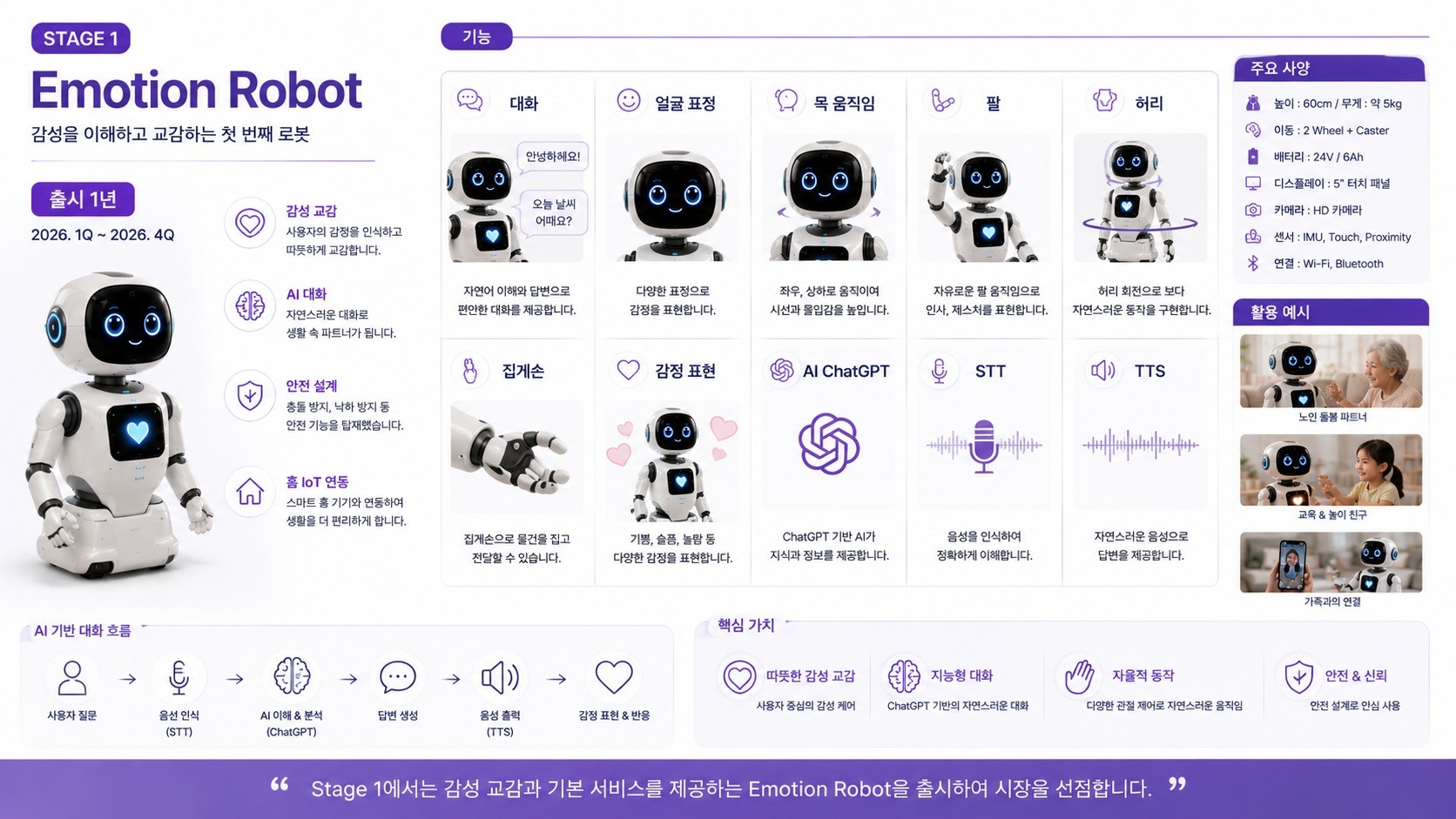
Stage 1 · Emotion Robot
Integrate conversation, facial expressions and basic gestures into one experience. Connect hardware to the dialogue pipeline and repeatedly test interactions, including interruption and error feedback. Key deliverables are an integrated prototype, scenario definitions, motion limits and test results.
View detailed information +
02 / DEVELOPMENT
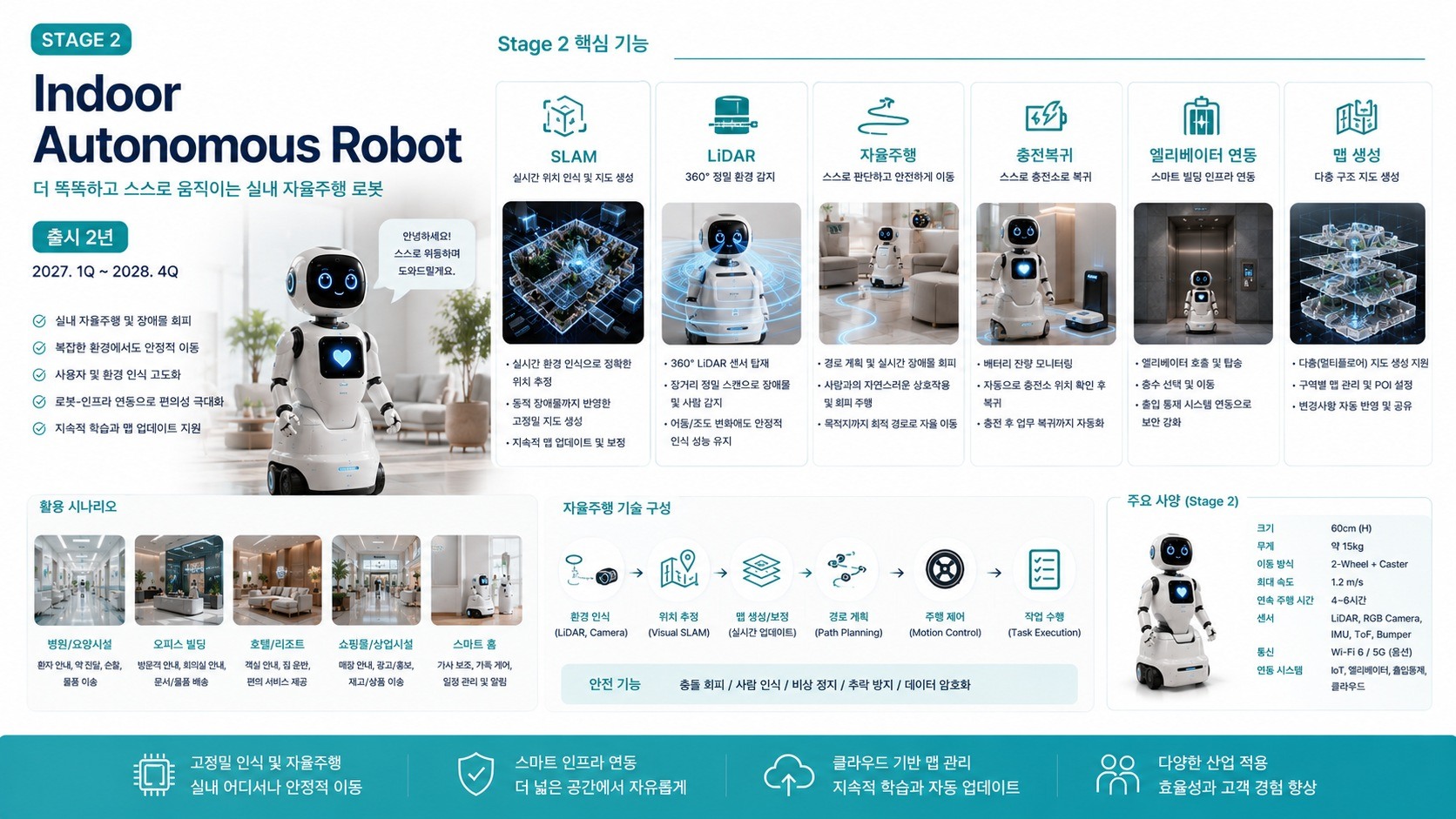
Stage 2 · Indoor Autonomous Robot
Develop indoor mapping, localization, route planning, obstacle avoidance and docking. Test across lighting conditions, floor types, narrow passages and moving people. Extend Stage 1 interaction with behavior rules for users and surroundings while the robot moves.
View detailed information +
03 / DEVELOPMENT
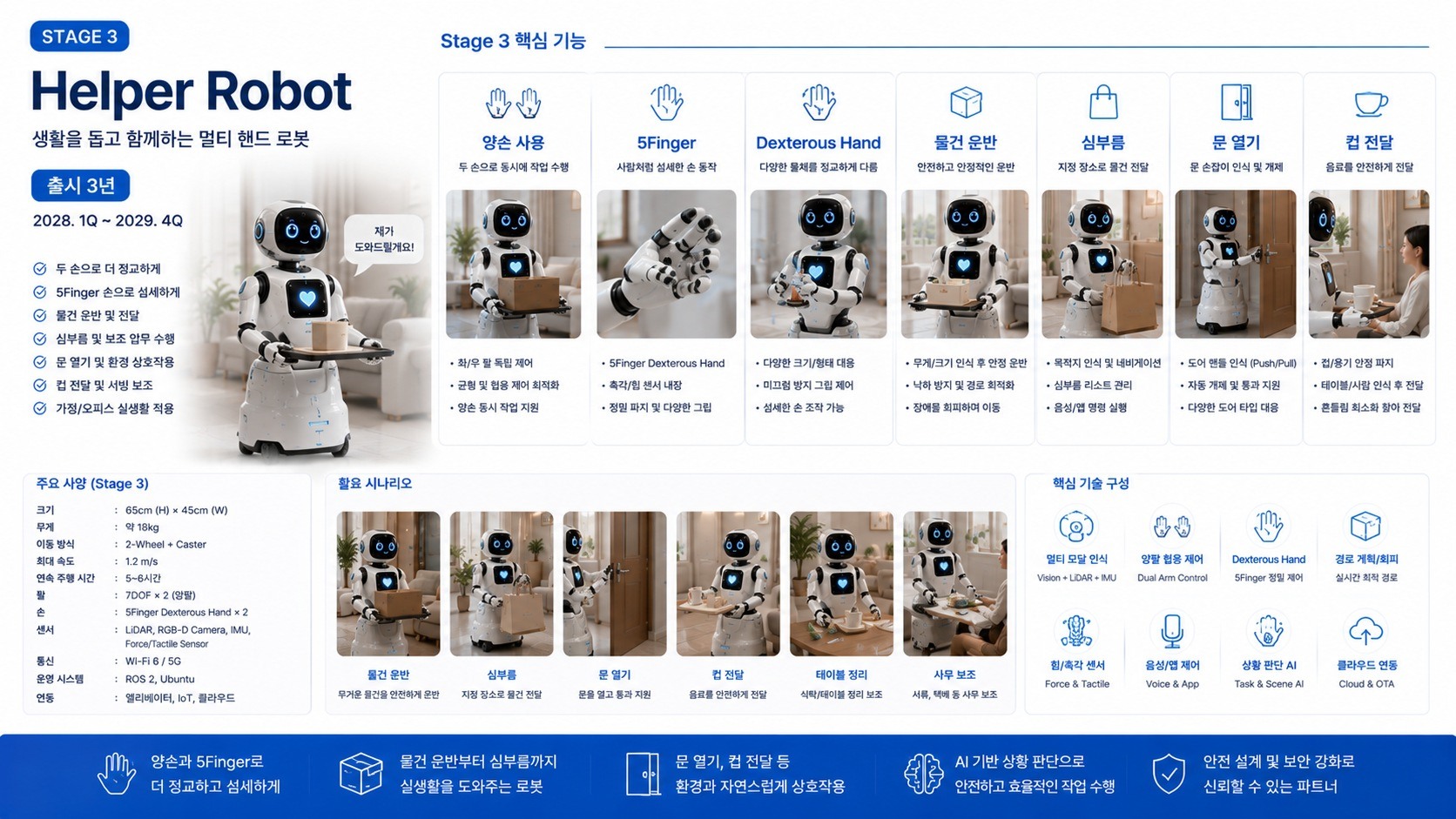
Stage 3 · Helper Robot
Extend to assistance by combining object perception, grasping and arm motion planning. Start with bounded tasks and approved objects, accounting for shape, material, weight and nearby people. Validate how the robot retries or stops when a grasp fails.
View detailed information +
04 / DEVELOPMENT
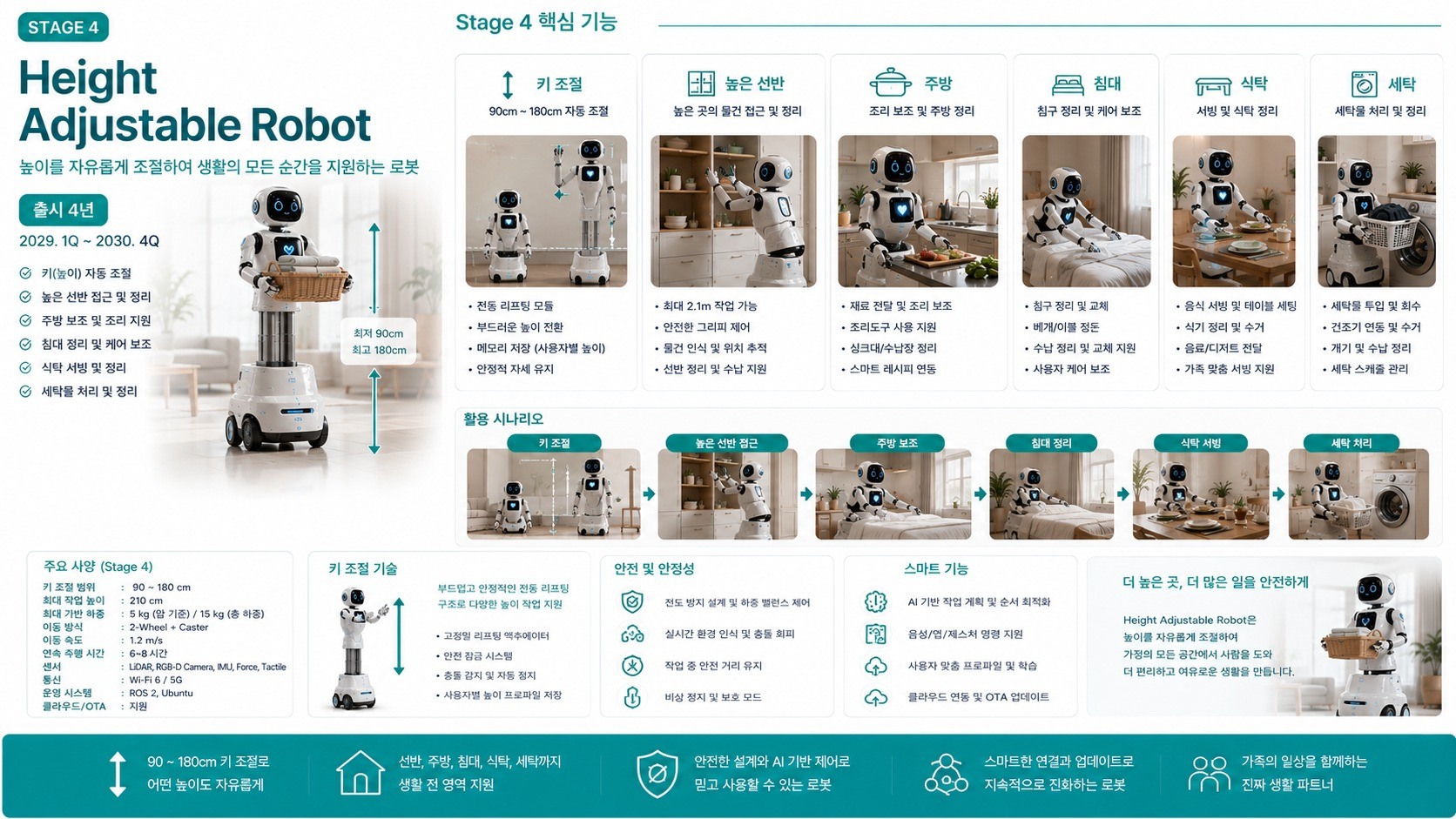
Stage 4 · Height Adjustable Robot
Explore adjustable working height to reach more spaces. Development considers structural stiffness, tipping stability, pinch prevention and control as posture changes. Integrate mobility and manipulation before extending the range of everyday settings.
View detailed information +
05 / DEVELOPMENT
Progression criteria
Stages describe development direction rather than completed launches or commercial availability. Integration, safety review, field pilots and production readiness determine when the scope can expand.
Shared AI, cloud and operational interfaces are intended to carry across stages. Actual schedules and commercial terms will be announced separately.