KERKorea Emotional Robot Inc.KO

KER / PRODUCT

Lumira Stage 1, the first step in emotional interaction

Product

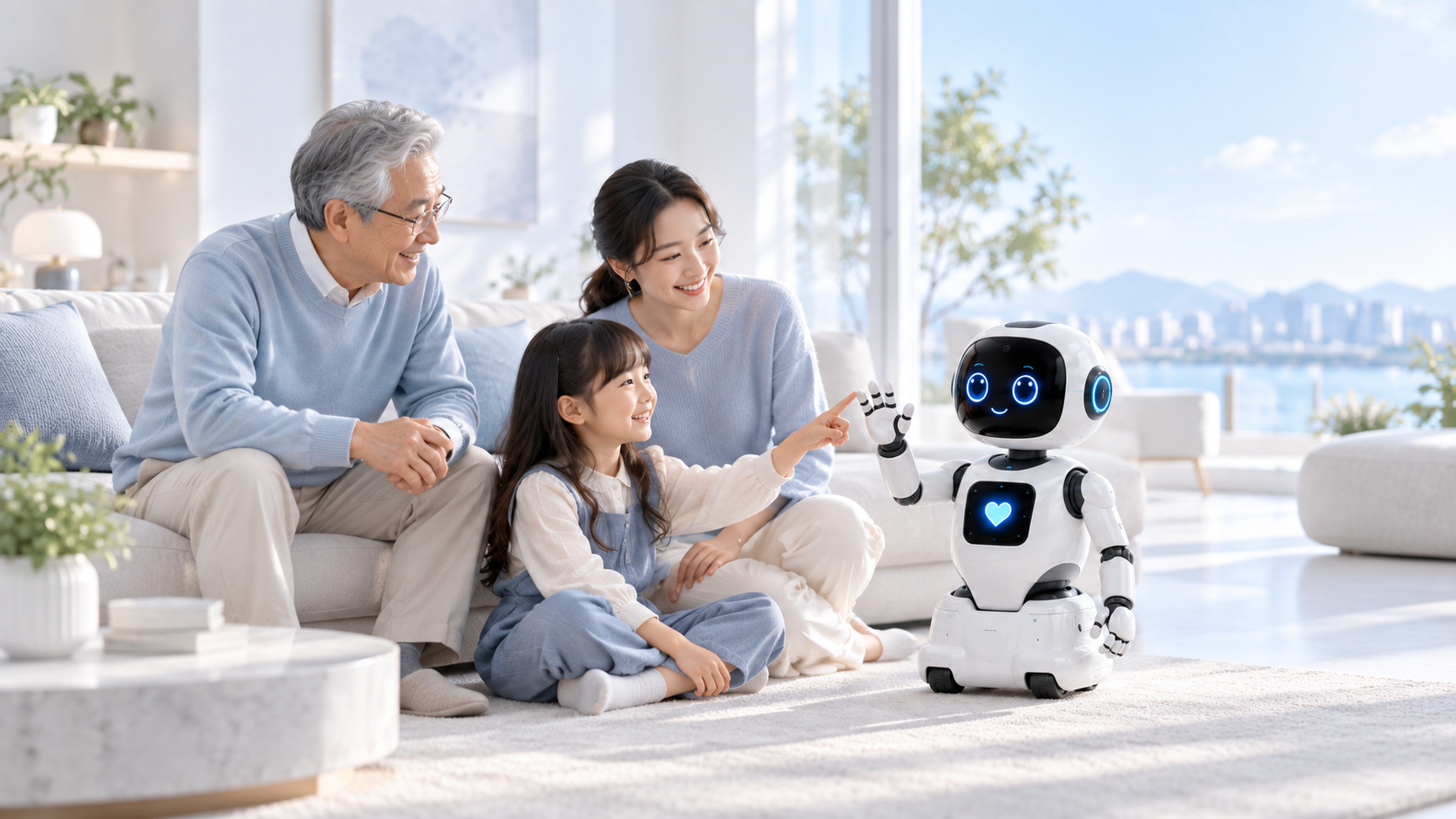
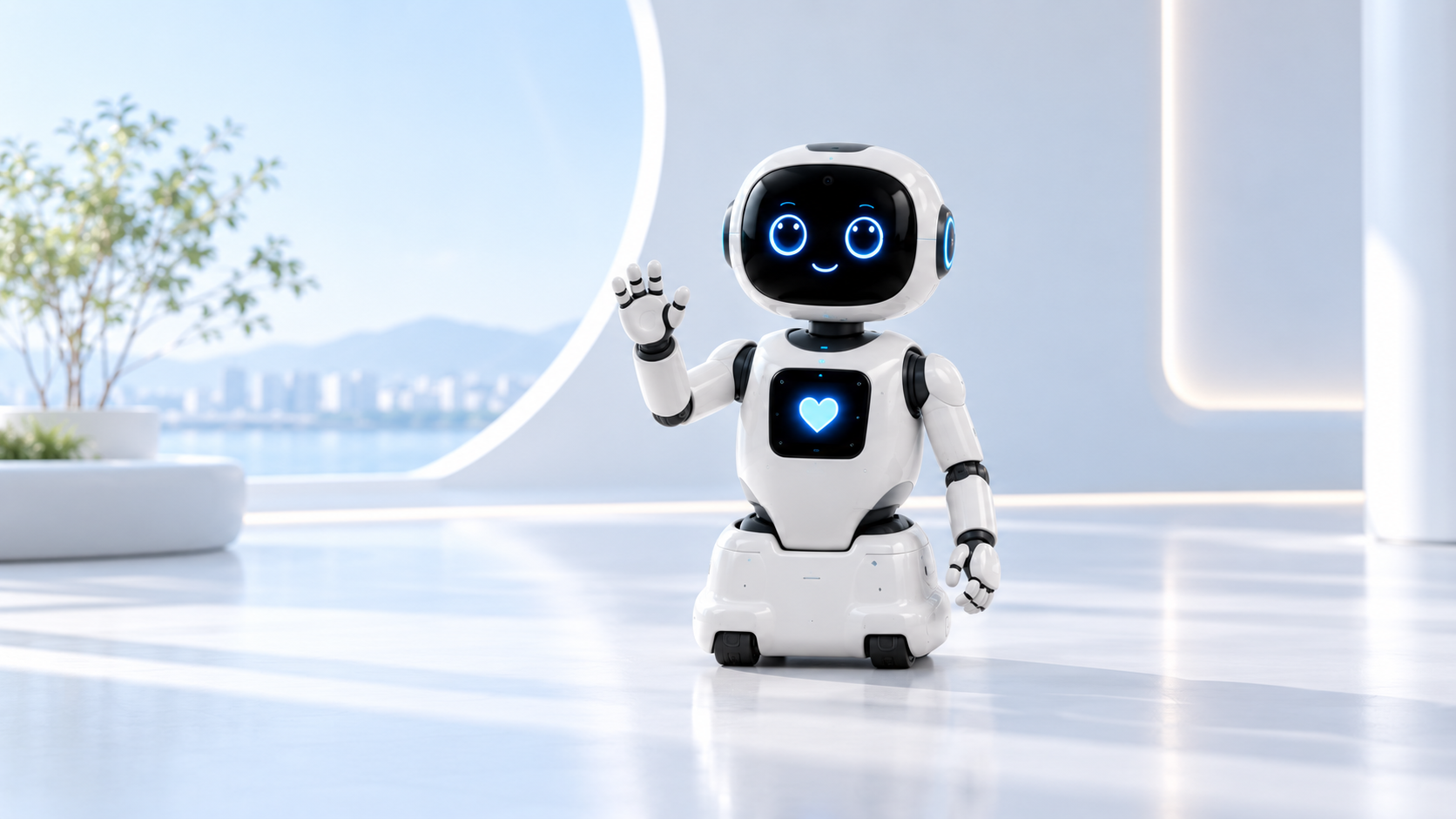
Lumira robot and application scene

01 / PRODUCT

Lumira Stage 1

Stage 1 is an Emotion Robot concept centered on AI conversation and expressive interaction. It aims to combine spoken responses with a facial display and coordinated head, arm and waist movements.

The presentation includes a wheeled base and gripper concept. Advanced indoor navigation is a Stage 2 priority, while expanded object manipulation and everyday assistance belong to Stage 3.

Development concept: Images are recreated concept illustrations based on the supplied company presentation. Features and specifications remain subject to development and validation.

View detailed information +
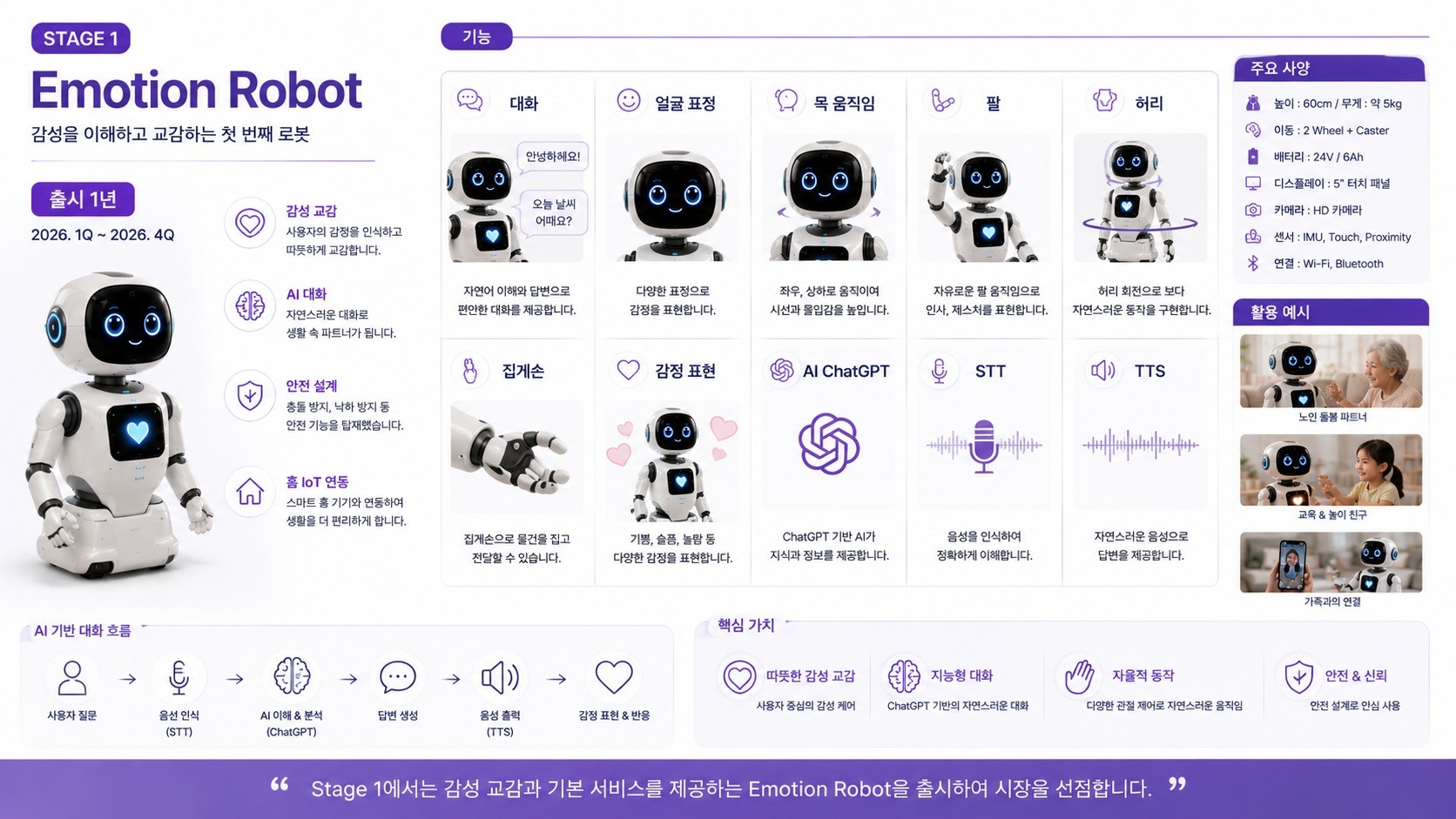
View detailed information
Complete original figure. Click to view at full size. Metrics and schedules are planned or illustrative; original Korean labels are retained.

The intended experience includes greetings, everyday questions and facial cues for listening, thinking and responding. Head and arm gestures will support the meaning of a conversation, with movement size and frequency adjusted to remain comfortable during repeated use.

Stage 1 prioritizes continuity of conversation and consistent expression. Evaluation follows the user journey through setup, speech input, response, interruption and restart. Development also covers clear status feedback and safe waiting behavior when someone approaches or connectivity is lost.

02 / PRODUCT

Conversation & expression

InteractionUser experienceDevelopment scope
Start speakingRespond to a greeting or questionAudio capture, speech segment detection and transcription.
Understand contextContinue a conversationUse dialogue history and preferences the user permits.
RespondCoordinate voice, expression and gestureSynchronize speech synthesis, facial animation and movement.
ClarifyRecover from misunderstandingsSupport clarification, cancellation and interruption.

The interaction design considers interruption, repetition and pausing. Longer answers can be divided to suit the situation, and clarification questions can help recover from misunderstanding. Coordinated audio and screen feedback are intended to make the robot’s current state easy to follow.

Expressions will be organized around greetings, attentive listening, supportive responses and guidance. Voice, eye shape and head motion can change how the same sentence feels, so alternatives will be evaluated within specific scenarios and refined using feedback.

03 / PRODUCT

Stage 1 planned specifications

Based on the Stage 1 hardware concept in the June 2026 company presentation. These are planning specifications, not final commercial specifications or certification results.

ItemPlanned specification
FormApprox. 60 cm tall / approx. 5 kg
Displays7-inch face LCD and 5-inch chest touch LCD
Input and outputFull HD camera, dual microphones and stereo speakers
Motion conceptTwo wheels plus caster; servos for neck, arms, waist and grippers
Power24 V / 6 Ah battery concept
Sensors and connectivityIMU, touch, proximity / Wi-Fi, Bluetooth

Charging time and runtime depend on workload, motion, connectivity and battery conditions. Validated figures will be provided after testing.

View detailed information +
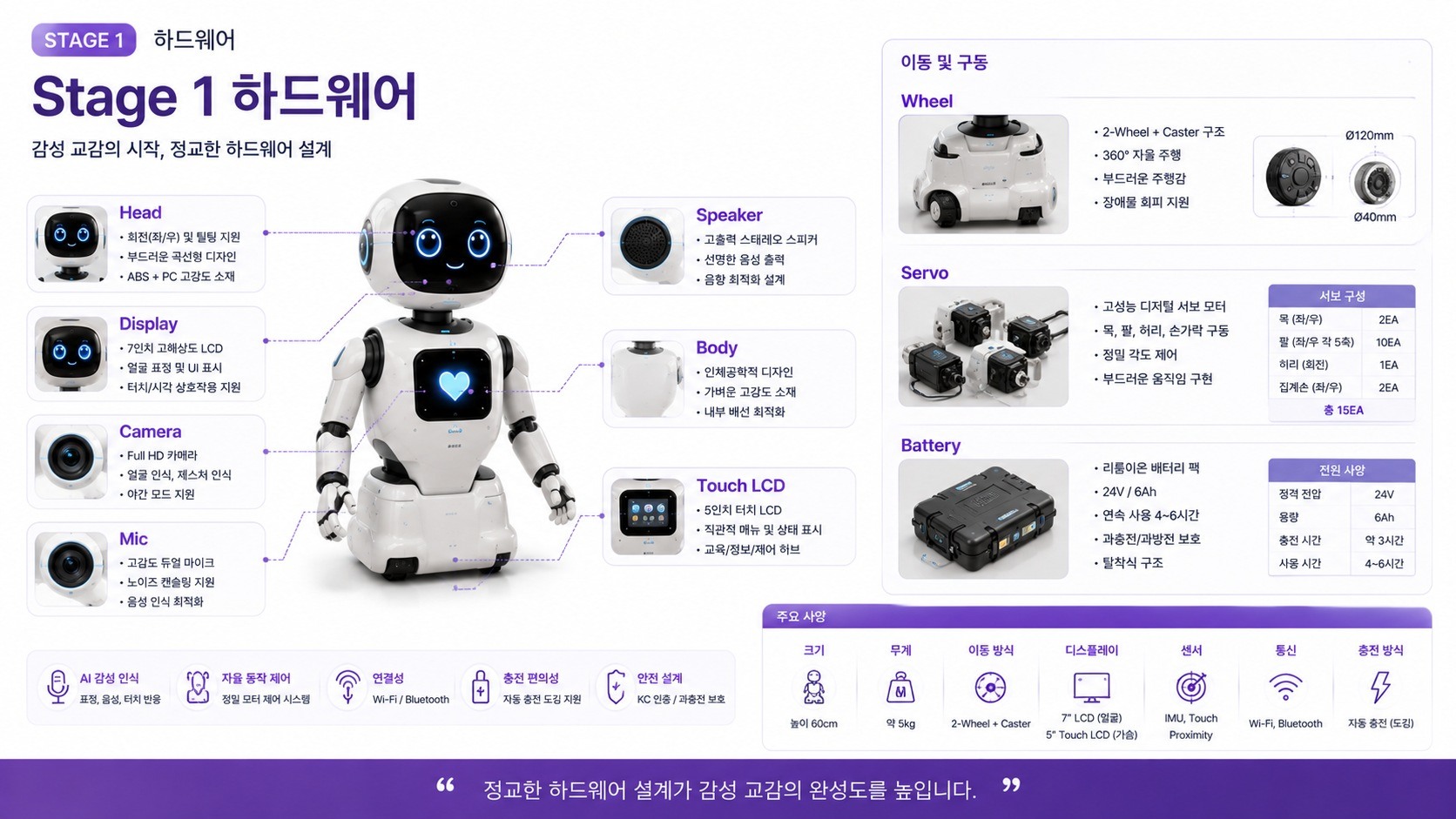
View detailed information
Complete original figure. Click to view at full size. Metrics and schedules are planned or illustrative; original Korean labels are retained.

Component selection considers processing capacity, sensor interfaces, power consumption, cooling space and serviceability. Integration tests will also examine motor-related electrical interference, display readability and microphone–speaker placement. The specification will be refined from these combined results.

04 / PRODUCT

Application scenarios

Lumira robot and application scene

A conversational companion at home. Greetings, everyday conversation, interest-based stories and simple reminders are candidate experiences. Users should be able to control notifications and personalization.

Learning and play. The concept combines questions, storytelling and quizzes with expressions and gestures. Age-appropriate content and caregiver controls are part of the development considerations.

Interaction in care settings. Conversation and activity prompts may help people stay connected. The concept does not promise medical diagnosis, treatment or replacement of human care. Institutional use requires pilots and operator review.

At home, regular conversation and shared interests can help evaluate whether users return to the robot. In education and care settings, pilots can be organized around defined activities, supervised sessions and observation. Volume, placement and guidance will be adapted to each environment.

Before a pilot, participants should agree on the robot’s expected role and the decisions that remain with people. Stage 1 focuses on conversation and expression; travel, carrying and precise manipulation are addressed in later development stages.

05 / PRODUCT

Company introduction video

KER introduction · approximately 1 min 46 sec · original audio · Download video

The introduction film presents the product’s appearance, interaction concept and direction of development. The product and roadmap pages explain how future scenarios relate to the scope of each stage.

LET’S TALK

Let’s talk about
life with robots.

Write an inquiry ↗
Contact ↗